Utilities Tech Outlook Weekly Brief
Be first to read the latest tech news, Industry Leader's Insights, and CIO interviews of medium and large enterprises exclusively from Utilities Tech Outlook
As the need for oil and gas products increases worldwide, and efforts to reduce greenhouse gas (GHG) emissions remains a top priority for many industries, the reliance on leak detection and repair (LDAR) services will only grow. Many new technologies are beginning to be used in conjunction with optical gas imagery (OGI) to detect emission and equipment leaks and improve LDAR programs. OGI uses a specialized sensor to detect thermal energy, allowing technicians to see gasses otherwise invisible to the naked eye. OGI-based LDAR programs have been discovered to be more efficient and detect more fugitive emissions than conventional Method 21-based LDAR programs. OGI, a cutting-edge technology, being improved upon with various new technologies, is changing the LDAR world by reducing emissions, saving time, and increasing safety for employers and employees. One technology used to both better detect leaks and invalidate false leaks is drone flyovers at oil refineries, chemical plants, and
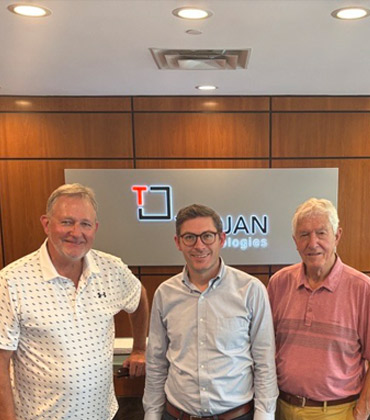
For over five decades, Trojan Technologies has empowered municipalities and industries to unlock the potential of wastewater, transforming it into safe, reusable water. By leveraging advanced ultraviolet (UV) disinfection and oxidation (UV AOP) technologies, it delivers robust solutions that neutralize harmful pathogens and contaminants, and advance water treatment standards. A global leader in water reuse innovation, Trojan Technologies partners with hundreds of municipalities worldwide, helping recycle more than 1.5 billion gallons of wastewater every day. Its UV AOP systems go beyond traditional disinfection, destroying trace organic contaminants and enabling safe reuse even in the most stringent applications, including potable reuse. From irrigation and industrial applications to drinking water purification, its technologies are redefining the possibilities of water reuse, delivering high-performance treatment without compromise. With more than 11,000 Municipal UV system installations and a legacy built on scientific depth and engineering precision, Trojan Technologies continues challenging conventional water treatment approaches. “Our customers are in desperate need of better technology to meet the demands of an ever-changing world,” says Pete Oveson, president. “That belief drives us to challenge the status quo and bring forward new solutions that truly shift how the world thinks about water treatment.” Real-World Technology for a Resilient Water Future At the core of Trojan Technologies’ expertise is UV-based disinfection, a physical process that inactivates harmful microorganisms, including chlorine-resistant pathogens like Cryptosporidium and Giardia, without producing chemical by-products or residues. It operates with a smaller footprint than many conventional methods and delivers rapid, dependable results. Whether targeting E. coli, fecal coliforms or Enterococci, its systems are designed to meet and exceed global regulatory standards while reducing operational costs and complexity. Its comprehensive product portfolio includes trusted brands such as TrojanUV®, Aquafine®, VIQUA®, AQUAFIDES® and Aria Filtra® (formerly Pall Water), serving a broad spectrum of municipal, industrial and residential water treatment needs..

The latest advancements in wastewater treatment technologies are crucial for efficiently managing substantial volumes of wastewater prior to reintroduction into the environment. Industrial and municipal wastewater treatment demands in the wake of increased production capacity, increased population growth and tighter effluent requirements are in constant pursuit of sustainable treatment solutions, highlighting the need for cost-effective process intensification strategies. World Water Works is an emblem of customer-centric innovation, delivering tailored and result-driven wastewater treatment solutions. With 25 years of expertise in wastewater treatment, World Water Works offers customized process intensification technologies to address the most pressing wastewater challenges faced by industrial and municipal clients. The company efficiently uses or upgrades the existing infrastructure to minimize the overall project costs while increasing the capacity of the treatment facility. This versatile approach enables clients to “Do more, In less, With less .”Intensification is like treating 10 gallons of wastewater in a volume which used to treat only five gallons of water. “We bring innovation to the industry with our novel technologies delivering superior effluent quality while using less infrastructure and consumables (energy / chemicals),” says Chandler Johnson, chief technology officer at World Water Works. Whether it is a municipal facility seeking a single process to integrate or a factory requiring a full-scope solution, the company delivers the pinnacle of excellence. For industrial wastewater treatment applications, World Water Works seamlessly incorporates a range of cutting-edge technologies to deliver holistic treatment solutions, ensuring adherence to precise effluent requirements before reintroducing the treated water into the environment. Enhancing treatment efficiency, its dissolved air flotation system, WWW DAF, plays a crucial role in eliminating fats, oils, grease, and total suspended solids. Its moving bed biofilm reactor technology, WWW MBBR, facilitates biological oxygen demand (BOD) removal, nitrification, and/or denitrification. It also uses a multi-disk screw press for solid processing and sludge dewatering to reduce the volume of sludge having to be disposed of.

Chris Shelton, AES Senior Vice President | Chief Product Officer | President, AES Next, The AES Corp

Cannon Lord, Manager, Data Engineering, Summit Utilities

Julian Kaufmann, Executive Vice President, CAMS

Jim Helvig, P.E., Vice President of Operations, Dashiell Corporation

Elvy Barton, Water and Forest Sustainability Senior Manager, Salt River Project

Albert Evans, Chief of Information Security, ISO New England

Pengfei Wang, Principal Engineer, BESS Technology Optimization, RWE
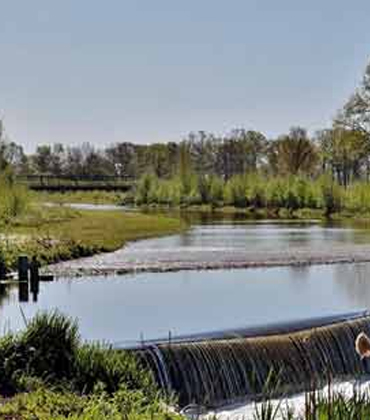
Sustainable water treatment in Canada emphasizes innovation, efficiency, and community impact, driving cleaner processes, resource recovery, and eco-friendly practices across the nation.
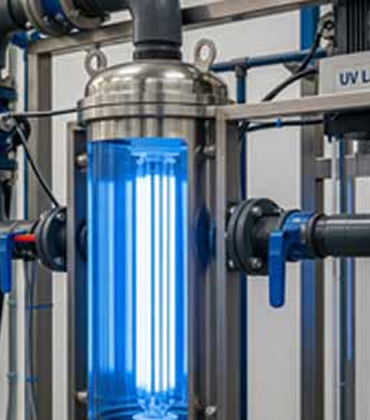
UV water treatment is revolutionizing water disinfection in Canada by offering a safe, efficient, and eco-friendly method to meet the increasing demands for water quality and public health.
Advancing Water Quality with UV Technology
UV water treatment solutions offer a straightforward process. Water passes through a chamber where it is exposed to a calibrated wavelength of light, which disrupts the DNA of bacteria, viruses, and protozoa. This prevents them from reproducing, ensuring the water remains safe for consumption. Because the system does not rely on chemical disinfectants, it eliminates concerns about byproducts and reduces the environmental footprint of water purification.
Across Canada, municipalities, commercial facilities, and rural communities are adopting UV systems to meet stringent water safety standards. These solutions are particularly attractive for regions with source water that is clear and low in turbidity, allowing light to penetrate easily. They are also valued for their efficiency and low maintenance requirements, which support cost control in utility operations.
The market for UV water treatment in Canada continues to evolve, with new models offering smart monitoring features, improved lamp life, and higher energy efficiency. As infrastructure upgrades become a priority, UV technology is expected to play an even greater role in ensuring safe water delivery. For utilities seeking a reliable and sustainable option, UV treatment stands out as a leading choice that aligns with public health goals and environmental stewardship. By investing in this technology, Canada’s water utilities strengthen their commitment to clean, safe drinking water for generations to come.